-
Nov , 19 2025
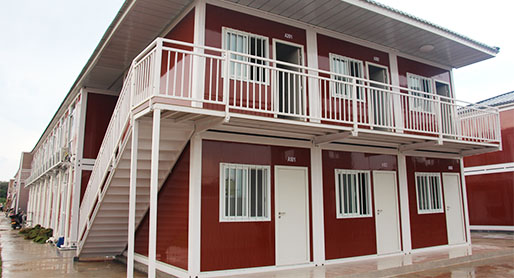
As a project manager, I live by one rule: "The cheapest option is almost always the most expensive." Nowhere is this truer than in remote worker accommodation. We've all seen the spreadsheets. A procurement officer finds a prefab unit for $2,000. It looks like a huge win. Then, the logistics quotes come in. The units are bulky and can only ship 2 per container. The assembly requires a specialized ...
-
Nov , 24 2025
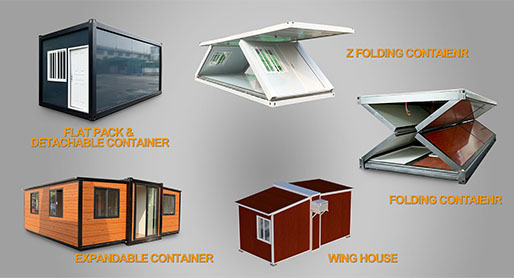
As a Project Manager, your site housing isn't a product decision; it's a logistics decision. We’ve seen too many projects stumble, not because the engineering was wrong, but because the accommodation logistics failed. You have 500 workers arriving in 8 weeks, and every day they can't be housed is a day your project burns cash. When you're looking at modular solutions, the choice always comes...
-
Dec , 04 2025
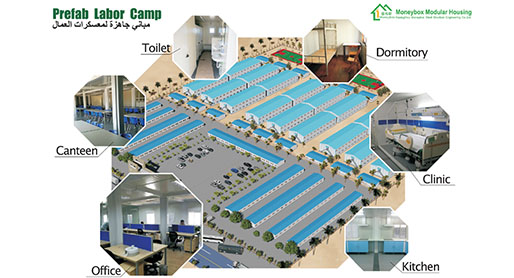
As a project manager, I can tell you where a remote camp really fails. It's not the dorms. It's the "life support" systems: the kitchen, the plumbing, and the sanitation. We've seen new PMs spend their entire budget on high-end dorms, only to realize they have no plan for feeding 300 workers or managing the wastewater. From my experience, a worker camp is a living, breathing ecosystem. A si...
-

Dec , 11 2025
As a campsite owner, what's your most valuable asset? It's not the land. It's the experience. From my experience, the old business model of "renting a patch of grass" for a tent is dead. Guests will pay $50/night for a tent spot, but they'll happily pay $250/night for an "experience"—a unique, comfortable, Instagram-worthy cabin. The problem? Traditional log cabins cost a fortune and take 6 ...
-
Dec , 24 2025
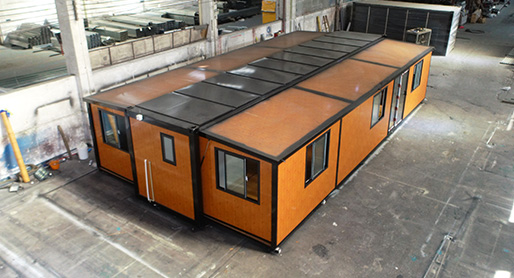
Expandable Container House Efficient Space Solutions · Rapid Deployment of Modular Buildings The expandable container house is an innovative modular building product that combines the advantages of container transportation with expandable structural design. In its transported state, it maintains standard container dimensions. Upon arrival at the site, it can be quickly expanded throu...
-
Dec , 26 2025
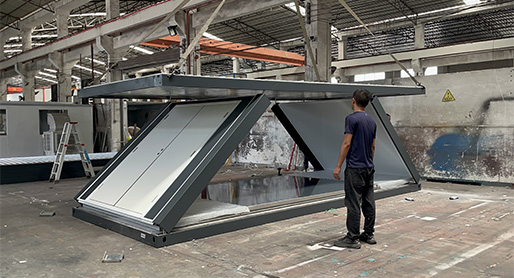
Folding Container House Efficient Transportation · Rapid Deployment · Flexible Application Modular Construction Solutions The folding container house, is a modular building product with a collapsible structure. Through innovative structural design, the entire house can be folded in its transported state, significantly reducing transport volume and logistics costs. Upon ...
-
Dec , 29 2025
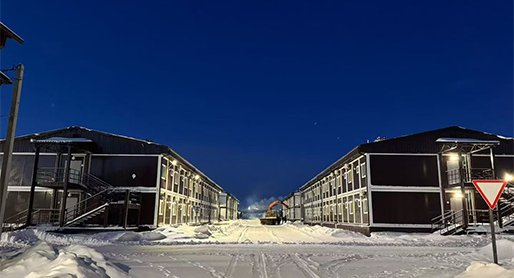
Detachable Container House Flexible, Cost-Effective & Modular Prefabricated Building Solution The Detachable Container House is a modern prefabricated building solution designed for fast installation, efficient transportation, and repeated relocation. With a modular steel structure and bolt-connected design, it can be completely disassembled into flat components, making it ideal for pro...
-
Jan , 14 2026
Hello everyone, today I'd like to share with you the most common questions clients ask by inquiries, emails, phone calls, or text messages? For instance, let's take a look at the information related to logistics transportation, delivery time, and shipping costs that we are familiar with today. Now, I'm preparing to answer these questions in the form of continents: Q.How many sets of ...
-
Feb , 28 2026
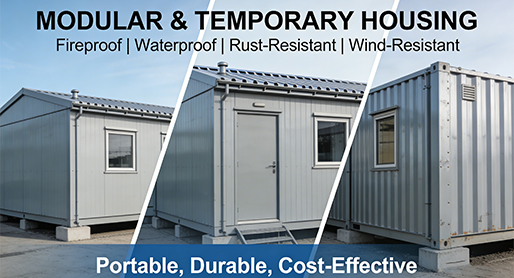
When customers ask about the thermal insulation, fire resistance, water resistance, wind resistance, and rust resistance of our container house, how should we clearly convey this information to them? The following content should be helpful to you. Q.How you heat the house as it is very cold here? A.In cold regions, insulation measures during the construction phase are fundamenta...
-
Mar , 10 2026
Prefabricated Housing Guide: Portable Cabins, Modular Buildings & Container Homes Article 1: An Overview of the Prefabricated Housing Industry: Trends, Benefits and Key Players The global prefabricated housing industry is experiencing steady growth, driven by the increasing demand for efficient, cost-effective, and sustainable building solutions. Unlike traditional on-site construction, prefab...
-
May , 07 2026
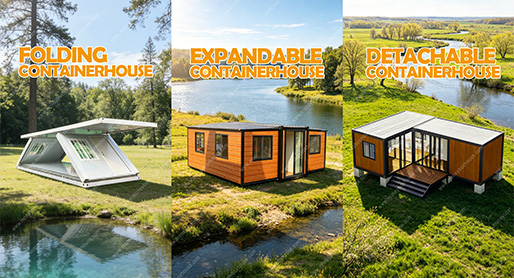
1. Introduction In the current rapid popularization of modular buildings, foldable container houses, expandable container houses, and detachable container houses have become mainstream products in the market, widely used in temporary buildings, homestays, offices, and other scenarios. However, due to significant differences in structure, performance, and applicable scenarios among the three...
-

Jun , 16 2026
Why Z-Folding Container Houses Are Becoming the Preferred Choice for Large-Scale Accommodation Projects As global industries continue to expand into remote locations, the demand for fast, cost-effective, and reliable accommodation solutions has never been higher. Mining companies, construction contractors, government agencies, and humanitarian organizations all face the same challenge: prov...



 English
  español
 français
 Deutsch
 русский
 italiano
 português
 Nederlands
 Ελληνικά
 हिन्दी
 online service


