
As a project manager, I can tell you where a remote camp really fails. It's not the dorms. It's the "life support" systems: the kitchen, the plumbing, and the sanitation.
We've seen new PMs spend their entire budget on high-end dorms, only to realize they have no plan for feeding 300 workers or managing the wastewater.
From my experience, a worker camp is a living, breathing ecosystem. A single point of failure—like a backed-up sewer or a kitchen that fails an HSE inspection—can shut down your entire multi-million dollar operation.
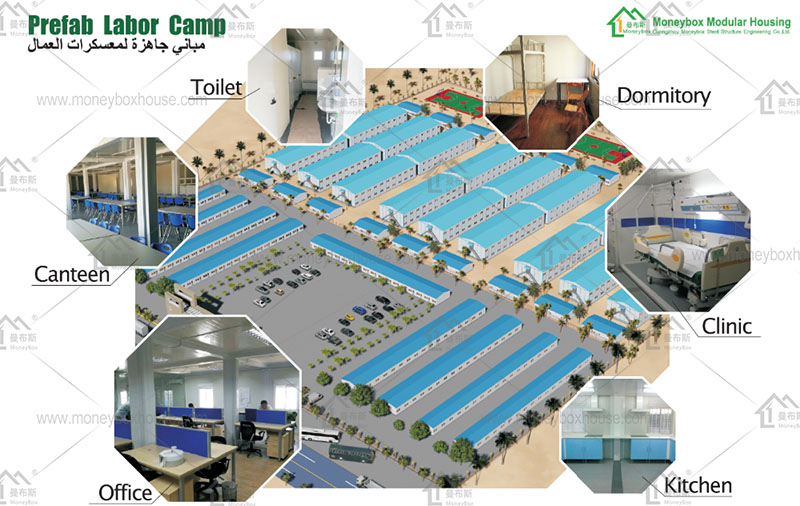
This guide isn't about bedrooms. It's about the real infrastructure that makes a camp operational: the kitchens, the ablution blocks, and the utility systems.
1. The Engine Room: Your Kitchen & Mess Hall
A fed crew is a happy crew. A hungry crew is a riot waiting to happen. Your kitchen and dining hall (mess hall) is the engine of your camp.
- The Challenge: Serving 900+ hot meals a day (300 workers x 3 shifts) in a remote location. This requires industrial-grade, hygienic, and durable facilities.
- The Solution: A dedicated modular kitchen and dining hall. Don't try to cram a hot plate into a spare dorm. You need a purpose-built modular labor camp canteen building with:
- Hygienic Surfaces: Stainless steel countertops and easy-to-clean flooring.
- Clear Flow: A smart layout separating "raw" food prep from the "cooked" service line.
- Proper Ventilation: Industrial-grade hoods to manage heat and smoke.
- Dry & Cold Storage: Walk-in freezers/coolers are essential.
Case Study: The Tencent Modular Prefab House Project wasn't just dorms; it included a fully functional modular canteen to support the high-tech staff. This proves that high standards for food service are universal.
2. The Critical System: Ablution & Sanitation (Toilets & Showers)
I've seen more projects grind to a halt over failed plumbing than any other single issue. A temporary camp housing with sewage system plan is not optional.
- The Challenge: Providing clean, reliable hot water and sanitation for hundreds of people in a place with no city sewer.
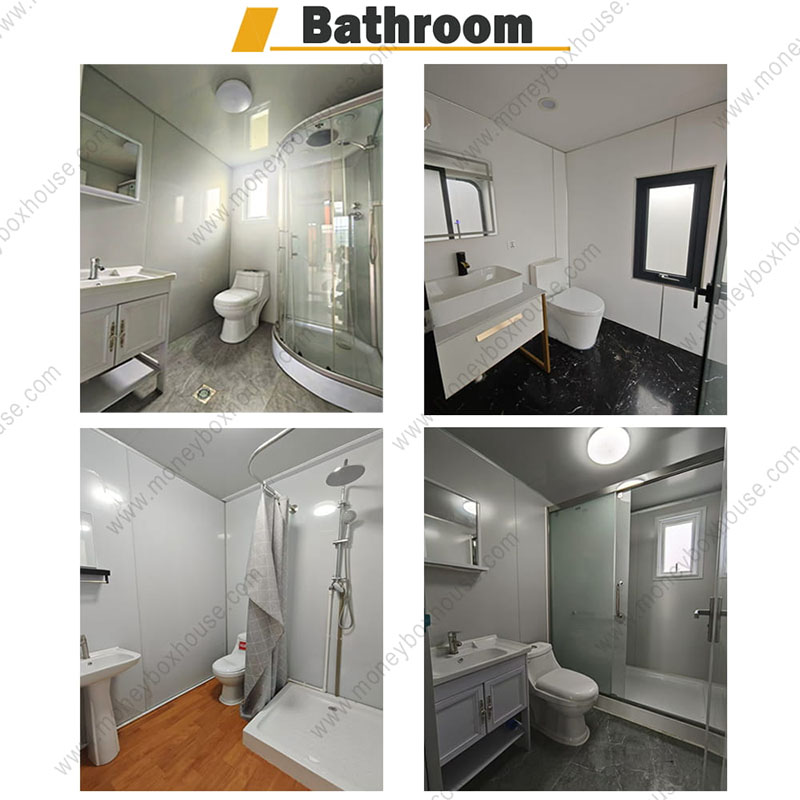
- The Solution: Purpose-built, pre-plumbed modular ablution blocks.
- Our Method: We build portable container toilets and portable shower rooms in the factory. All the internal plumbing, fixtures, and waterproof flooring are installed and sealed. On-site, your team only has to connect the main water inlet and the main sewage outlet. This "plug-and-play" system is fast, reliable, and reduces on-site plumbing errors by 90%.
3. The Utility Backbone: Power, Water, and Waste
A camp is a small city. It needs municipal services.
- Power: Your camp will be powered by generators. This means every single appliance, from the AC units to the kitchen freezers, must be energy-efficient. As we covered in our Insulation Guide, high-quality insulated panels are the key to managing your site's power load.
- Water: You need potable water storage and a water heating system (often a centralized boiler) to feed the kitchens and ablution blocks.
- Wastewater (Sewage): This is the big one. You can't just dump "black water" (sewage) and "grey water" (from sinks/showers). You need an on-site solution, which is typically a modular Sewage Treatment Plant (STP).
At-a-Glance: The Full-Service Camp Checklist
| Facility | Amateur Mistake (The "Cheap" Camp) | Professional Solution (The "TCO" Camp) |
| Kitchen/Dining | A few hot plates in a dorm. High fire/HSE risk. | Dedicated modular canteen with stainless steel kitchen. |
| Sanitation | Plastic outhouses. Cold showers. | Pre-plumbed modular ablution blocks with hot water. |
| Wastewater | No plan. Creates a biohazard. | Integrated modular Sewage Treatment Plant (STP). |
| Result | Low morale, failed inspections, project shutdown. | High morale, HSE compliant, operational stability. |
Conclusion: Stop Buying Dorms. Start Building a System.
The success of your worker camp facilities depends on your supplier's ability to think beyond the bedroom.
Can they design a kitchen flow? Can they deliver pre-plumbed ablution blocks? Can they advise on integrating a sewage treatment plant?
This is the difference between a "box seller" and a "solution partner." At Moneybox, we have over 10 years of experience delivering full-package, turnkey labor camp accommodation systems. We handle the "life support" so you can focus on the project.
- Get a Quote for a Full-Service Camp
- Explore Our Modular Toilet & Ablution Units
Frequently Asked Questions (FAQ)
1. What is a "modular site housing with dining facilities"? This is a purpose-built modular building, often made by combining several Flat Pack or K-Type units. It includes a commercial kitchen area (prep, cooking, washing) and a large open-plan dining area (mess hall) for workers.
2. What about the sewage system for a temporary camp? You cannot connect to a city sewer. You must install an on-site temporary camp housing with sewage system. This is typically a containerized or modular Sewage Treatment Plant (STP). This plant treats the wastewater on-site, allowing it to be safely discharged (e.g., for dust control) in compliance with local environmental regulations.
3. Do I need a separate kitchen and dining hall? For any camp over 50 people, yes. Combining them is a major fire and safety risk. A dedicated modular canteen is essential for hygiene, safety, and worker morale.
4. What are "ablution units"? Ablution is the technical term for washing. A modular ablution unit is a pre-plumbed container building that includes multiple toilets, sinks, and showers in one block.


 English
  español
 français
 Deutsch
 русский
 italiano
 português
 Nederlands
 Ελληνικά
 हिन्दी
 online service


