
Large mining operations, infrastructure developments, and commercial construction projects require practical, scalable, and efficient building solutions. From worker accommodation and site offices to project management facilities and commercial spaces, modular housing can help project owners create functional facilities while adapting to changing site requirements.
However, choosing the right modular housing solution involves more than selecting a building type. Transportation conditions, project scale, installation requirements, layout flexibility, environmental conditions, and long-term use should all be considered.
This guide explains how to choose modular housing for mining camps and large infrastructure projects, compares common container house types, and outlines the key factors to consider when working with a modular building supplier.
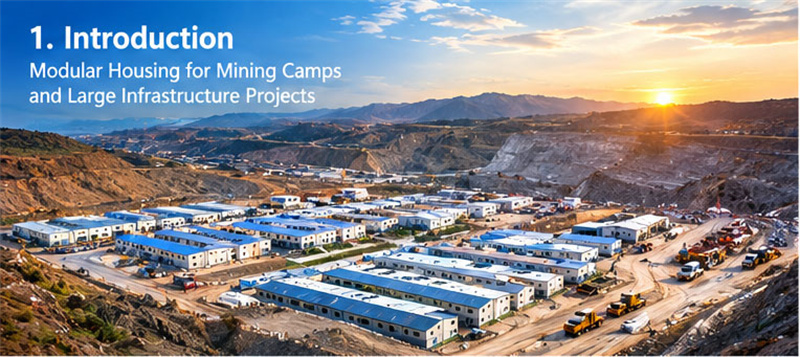
Modular housing refers to buildings manufactured or assembled using standardized components, structural systems, and prefabricated elements. Depending on the design, modules can be transported to a project site and installed or assembled into individual buildings or larger facility layouts.
In mining and infrastructure projects, modular buildings may be used for:
The appropriate solution depends on the project’s operational requirements, local regulations, site conditions, and intended service life.
For large projects, modular housing can also be planned as part of an integrated site facility solution rather than as individual standalone buildings.
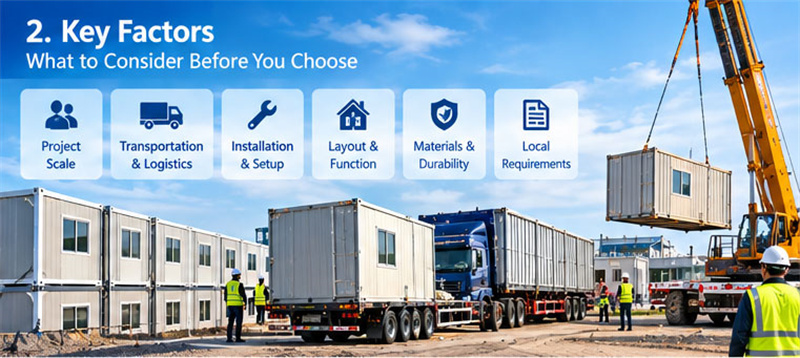
Before selecting a modular building type, project owners and contractors should evaluate several important factors.
The number of workers, staff, and visitors directly influences the required number and layout of buildings.
A small construction site may need several offices and dormitories, while a large mining operation may require a coordinated accommodation camp with sleeping rooms, dining facilities, sanitation areas, and administrative spaces.
A practical planning process should consider:
For example, a project designed for hundreds of workers may benefit from a standardized modular layout that can be repeated across different functional areas.
The final building quantity should be determined by the actual occupancy plan, room configuration, local requirements, and project schedule.
Transportation and installation are important considerations, especially for remote mining areas and large infrastructure sites.
Different modular building systems have different transportation dimensions, packing methods, assembly procedures, and equipment requirements. Buyers should evaluate the distance from the factory to the project location, road access, unloading conditions, and available installation equipment.
Z-Folding Container Houses are designed around a folding structure that can support efficient transportation and rapid deployment, depending on the specific product configuration. Detachable Container Houses, by comparison, are assembled from separate components and can offer flexibility in building dimensions and layout.
The most suitable choice depends on the project’s logistics, required building size, installation resources, and delivery plan.
A mining camp or infrastructure site needs more than individual rooms. The overall layout should support daily operations, access, safety, and the separation of different functional areas.
Modular housing can be arranged into different building configurations, including:
For projects with changing requirements, a modular system that supports layout adjustments or additional buildings may be useful.
Before production, buyers should confirm room dimensions, floor plans, door and window positions, electrical requirements, plumbing arrangements, and other relevant specifications.
Mining camps and infrastructure projects may be located in hot, cold, humid, windy, or remote environments. Building materials and system design should be selected according to the local climate and project requirements.
Important considerations include:
The actual performance of a modular building depends on its materials, design, manufacturing quality, installation, and maintenance. Buyers should request technical specifications and applicable test documentation where necessary.
Local building codes, fire regulations, structural requirements, and site approval procedures should also be reviewed before construction or installation.
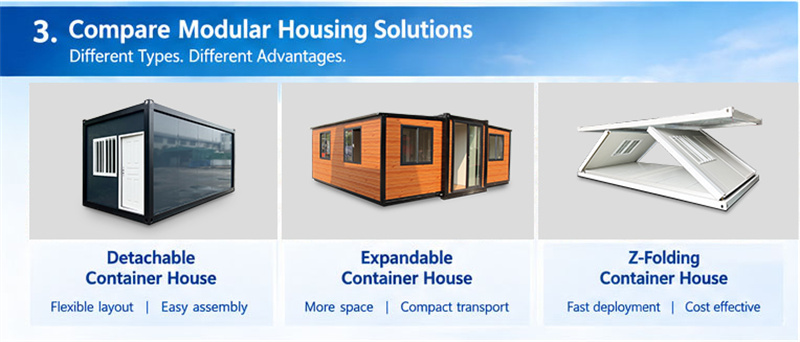
Different container house types can serve different project requirements. There is no single building system suitable for every site.
A Detachable Container House is assembled from separate structural and enclosure components. This configuration can provide flexibility in dimensions, interior layout, and building arrangements.
It can be considered for:
The suitability of a detachable system depends on its structural design, component specifications, installation process, and project requirements.
For projects that require customized room layouts or different building arrangements, buyers should discuss the available design options with the manufacturer.
An Expandable Container House uses a folding or expandable configuration that increases the usable space after deployment.
It may be suitable for applications such as:
Expandable designs can provide a practical option when compact transportation and increased deployed space are important considerations.
Buyers should compare the folded dimensions, deployed dimensions, transportation method, installation process, and interior configuration before making a purchasing decision.
A Z-Folding Container House uses a folding structure designed to support transportation and rapid deployment.
It may be used for construction site offices, temporary dormitories, project facilities, and other applications where deployment speed and logistics are key considerations.
Potential benefits depend on the specific model and configuration. Buyers should assess transportation efficiency, installation requirements, building dimensions, and the intended duration of use.
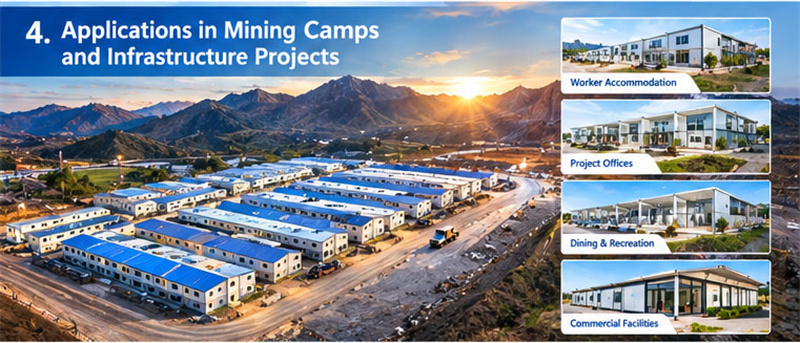
Modular housing can support different stages of infrastructure development, from initial construction through ongoing site operations.
Mining operations may require accommodation for workers, supervisors, and support personnel. A modular camp can combine dormitories, offices, dining facilities, sanitation areas, and other supporting buildings.
The final camp layout should reflect workforce size, operating schedules, environmental conditions, and local requirements.
Site offices provide space for project managers, engineers, supervisors, and administrative teams. Modular offices can be configured to support meetings, daily coordination, document management, and project operations.
The required configuration depends on the number of users, office functions, and site conditions.
Modular buildings can also be considered for office complexes, shopping and commercial centers, and supporting facilities associated with larger developments.
Detachable modular systems may offer options for different room arrangements and building configurations, depending on the project design.
For commercial projects, factors such as customer access, building appearance, utilities, accessibility, and local approval requirements should be included in the planning process.
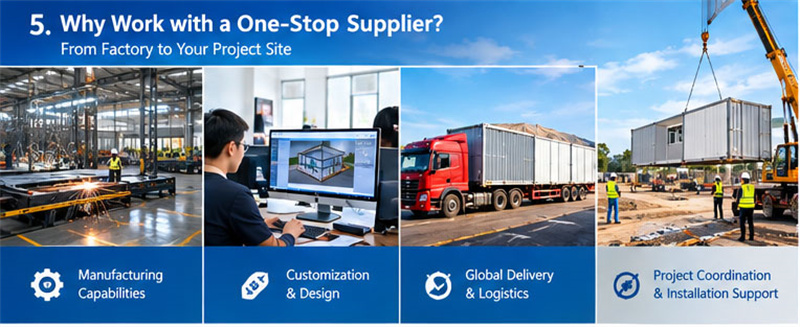
A modular housing project may involve more than manufacturing individual building components. Depending on the project scope, buyers may need support with product selection, customization, technical coordination, production, delivery, and installation planning.
A one-stop supplier can help coordinate different aspects of the project through a more integrated communication process.
When evaluating a manufacturer, consider:
Guangzhou Moneybox Steel Structure Engineering Co., Ltd. provides modular building products and project-oriented solutions for customers in different markets. Its product range includes Expandable Container Houses, Detachable Container Houses, Z-Folding Container Houses, and other prefabricated building solutions.
For customers planning mining camps, infrastructure site facilities, offices, or accommodation projects, the selection process should begin with a clear understanding of the project’s requirements.
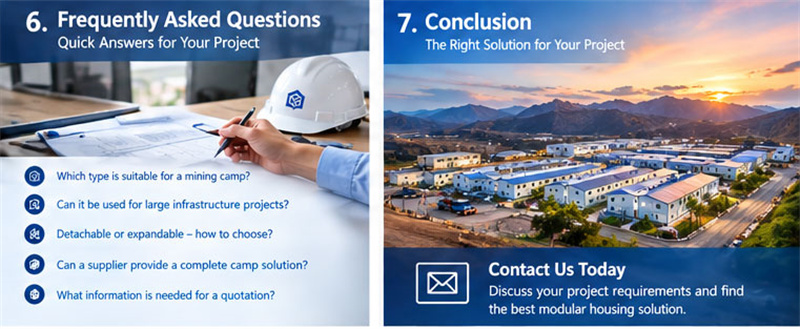
The appropriate type depends on accommodation capacity, site conditions, transportation, installation requirements, budget, and intended use. Detachable, expandable, and folding container houses may be considered for different applications.
Yes. Modular buildings can be designed for applications such as site offices, worker accommodation, dormitories, and supporting facilities, subject to the applicable design and regulatory requirements.
Compare the required building space, transportation conditions, layout, installation process, and intended use. Ask the manufacturer for product dimensions, specifications, and a project-specific recommendation.
Some suppliers offer a wider range of products and project coordination services. Confirm the actual scope, including design support, manufacturing, delivery, installation, and any additional facilities required.
Provide the project location, building purpose, estimated quantity, accommodation capacity, preferred layout, dimensions, required facilities, and expected delivery schedule. Drawings or site information can help the supplier prepare a more relevant proposal.
Choosing the right modular housing solution for a mining camp or large infrastructure project requires careful consideration of project scale, transportation, installation, building layout, materials, and local requirements.
Detachable Container Houses, Expandable Container Houses, and Z-Folding Container Houses offer different configurations and potential applications. The best-fit solution should be determined by the actual needs of the project rather than by product type alone.
With the right planning and supplier coordination, modular buildings can support practical accommodation, site offices, and other project facilities.
Planning a mining camp, infrastructure facility, or modular building project? Contact Guangzhou Moneybox Steel Structure Engineering Co., Ltd. to discuss your project requirements and explore suitable modular housing solutions.


 English
  español
 français
 Deutsch
 русский
 italiano
 português
 Nederlands
 Ελληνικά
 हिन्दी
 online service


